Future Fictions: Ghibli Orchestra
2014 | Journal Article
Whether Andrew Giampa, an orchestral soloist from Philadelphia, said that emotions can be magnified and channelled when you perform on a stage (Giampa, 2011) or Emily Yeh, a concert audience from Portland mentioned “when you are performing in an orchestra, you are 100% living in the present” (Yeh, 2011), it is clear that playing music in a big space surely brings passion and emotion to not only the player but also the audience. What the world around us might look like in the near future even has long been an essential argument of imagination for creative people to discuss. This paper describes the concept, an early model of the prototype for the festival of Future Fictions which takes place in the city of Newcastle upon Tyne in September of 2015.
How do people from different positions celebrate their landscapes and ways of living?
2014 | Journal Article
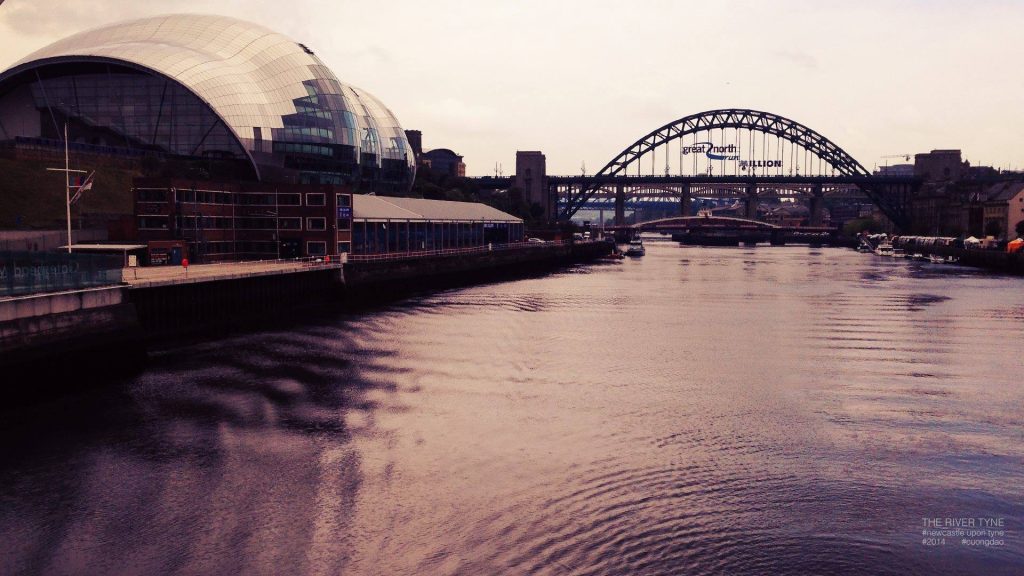
Abstract: When the evening had not come yet, she was sitting on a bench in front of the civic centre. Wind blew a sudden blast into her face, but could not stop her from looking at the Church of St Thomas the Martyr, a sight that she was first in love with, as an outsider. Trees dropped their leaves again from her view that day. Staying in her terrace for years as an insider while she was counting every falling leaf for every melody from the song playing from her earphone every Sunday. Trees prepared for season, and to mark the winter maybe? How one treats herself as an insider or an outsider has very long been an axiom that many landscape architects, planners and designers have been discussing in both a way of seeing and a place of living. In this paper, we discover some of the influences that act as vital phenomena in a way why different people experience landscapes differently.
Transdisciplinary: Being An Egyptologist
2014 | Journal Article

Abstract: While creative digital practice involves both processes from research to design, the relationship between a designer and his audience has becoming a compelling topic for creative practitioners to study since the bust of dot-com age. The ways how people communicate to each other vary in not only the particular procedure for transferring aesthetic messages from creators, but also the method for approaching artworks from viewers. Although designers and audiences may belong to two completely different communities in terms of profession, they truly have familiar experience to share in the same medium. It is no doubt that creative practitioners will need to work in both humanity and science fields, as many disciplines as possible.